Teen Mental Health and Social Media: What Parents Need to Know | Ashlyn Hirota
Listen On


As a pediatric ophthalmologist and mom of three, I spend a lot of time thinking about what is truly capturing our kids’ attention. Not just screen time in general, but what is happening on those screens and how it is shaping the way our children see themselves.
How early are body image beliefs being formed?
How much of our teens’ self worth is being influenced before they even realize it?
If you have ever wondered what social media is really doing to teen confidence, this conversation will stay with you.
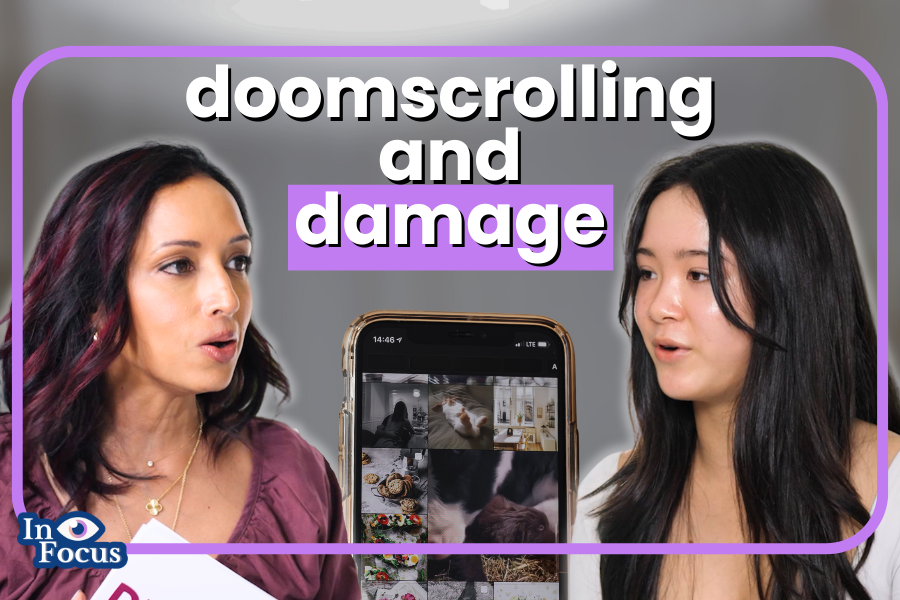
In this episode of In Focus: Vision, Clarity and Eye Health for the Whole Family, I sit down with Ashlyn Hirota, a thoughtful and insightful 16 year old high school junior whose school project on social media and body image stopped me in my tracks.
What makes this episode different is simple.
This is not just adult commentary about teens.
This is a teen perspective, grounded in real peer data, lived observation, and powerful visual storytelling.
Why This Topic Matters Right Now
As eye doctors, we often talk about screens in terms of vision, eye strain, and sleep disruption.
But screens are doing something deeper.
Social media is shaping identity during one of the most neurologically sensitive periods of development. And as both a physician and a parent, that reality feels impossible to ignore.
Ashlyn’s project explored exactly that intersection, not to shame social media use, but to raise awareness about its potential impact.
Her goal was not to eliminate social media.
Her goal was clarity.
Meet Ashlyn: A Teen Observing From the Outside
One of the most surprising parts of our conversation is that Ashlyn does not have social media.
Yes, really.
With supportive but firm parental boundaries, she grew up with a restricted phone during the pandemic years while many of her peers became increasingly immersed in online platforms.
At first, she experienced what many teens would feel.
FOMO.
But over time, she began noticing something else. She watched friends slowly shape themselves to match what they were seeing online.
In her words, she began seeing peers:
Chasing the “perfect image”
Comparing themselves constantly
Losing pieces of their authentic selves
That observation became the spark for her project.
The Quest Project That Sparked a Bigger Conversation
As part of her school’s visual storytelling program, Ashlyn was asked to explore a topic she felt passionate about.
She chose social media and teen body image.
What followed was far more comprehensive than most high school projects.
Ashlyn created:
A formal research paper
Original artwork using unconventional media
Awareness posters
A summary video for teen audiences
An anonymous peer survey
Her approach combined science, storytelling, and peer insight in a way that was both emotionally powerful and data driven.
The Data That Shocked Her Peers
Through her research and anonymous Google Form survey of classmates, Ashlyn uncovered numbers that made many students pause.
From her academy wide responses:
80 percent reported current body image concerns
70 percent said they sometimes feel “not enough” because of appearance standards
60 percent reported anxiety, depression, or mental health decline related to media and body image
Perhaps most striking was how quiet this issue had been before the anonymous survey.
Many teens were struggling.
Few were talking openly about it.
That silence is exactly why this conversation matters.
When Filters Redefine “Normal”
One of the most powerful moments in Ashlyn’s project was her video experiment.
She took a natural photo of herself and ran it through increasingly aggressive beauty filters and AI enhancement tools.
The transformation was dramatic:
Skin completely smoothed
Artificial blush added
Eyelashes lengthened
Facial proportions subtly altered
All from one simple prompt: “Make me beautiful.”
Some teens were shocked.
Others were not surprised at all, because they use similar filters regularly.
That may be the most concerning insight of all.
When altered becomes normal, reality starts to feel inadequate.
Art That Says What Words Cannot
Because her class focused on visual storytelling, Ashlyn translated her research into original artwork.
In a moment of creative serendipity, spilled makeup on an early sketch led her to experiment with using expired makeup as an art medium.
The symbolism was powerful.
Her pieces explored themes of:
Being “made of” beauty standards
Media shaping identity
The pressure to present perfection
The tension between authenticity and performance
One particularly striking piece featured a portrait with the eye replaced by magazine imagery, highlighting how media influences perception itself.
As an eye doctor, that visual metaphor hit especially close to home.
What Changed After Her Project
Ashlyn was not trying to eliminate social media from her peers’ lives. She was trying to increase awareness and intentional use.
And it worked.
Some classmates chose to:
Do short social media cleanses
Reduce screen time
Reflect more critically on filters
Talk more openly about body image
Small shifts.
But meaningful ones.
Because behavior change in teens rarely starts with rules.
It starts with awareness.
The Bigger Takeaway for Parents and Providers
One of the most refreshing parts of this conversation was Ashlyn’s balanced perspective.
She does not believe social media is inherently dangerous.
She believes teens need better awareness and support to navigate it.
Her biggest message?
Community and mindset matter.
When teens feel safe talking about these pressures, the impact of comparison and perfection culture softens.
Silence is what allows the pressure to grow unchecked.
Final Thoughts
As both a pediatric ophthalmologist and a mom, this conversation left me hopeful.
Not because the problem is small.
But because thoughtful, observant teens like Ashlyn are already starting the conversation from within their own generation.
If you have a teen, care for teens, or work in pediatrics, this episode is worth your time.
Because vision is not just about what our kids see with their eyes.
It is about how clearly they see themselves.
Want to Learn More?
You can subscribe to my podcast, In Focus, anywhere you listen—or follow along on Instagram for updates and tips.
Watch this episode on Youtube right now!
Thanks for reading—and for doing what you can to protect your child’s vision, one step at a time.
– Dr. Rupa Wong
Pediatric Ophthalmologist | Surgeon | Mom of 3
This episode is brought to you by The Pinnacle Podcast Network! Learn more about Pinnacle at learnatpinnacle.com