Glaucoma Prevention: Family Eye Health Guide | Dr. Vicki Chan
Listen On


There are moments in medicine when something clicks in a way you can’t unsee.
This conversation was one of those for me.
As a pediatric ophthalmologist, I spend my days caring for children’s eyes — watching how vision develops, how nearsightedness progresses, and how early changes can shape a lifetime of sight. But as a mom, I’m also thinking about something bigger:
What happens to our family’s vision when no one is paying attention?
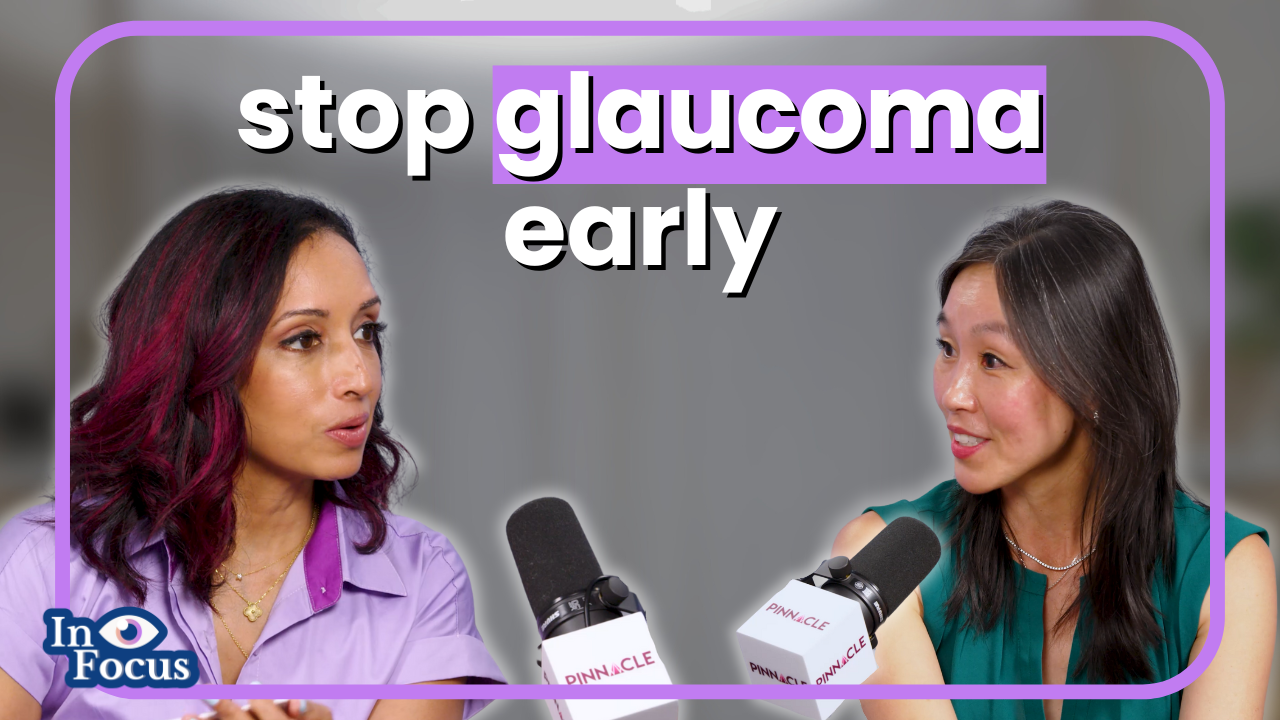
That’s why I sat down with Dr. Vicki Chan, a fellowship-trained glaucoma specialist who has spent her career treating what’s known as the silent thief of sight.
Because glaucoma doesn’t announce itself.
Most people don’t feel it.
They don’t see it.
They don’t know it’s there.
Until vision is already gone.
And that’s what makes it so dangerous.
We Treat Glaucoma Like It’s an “Older Person” Problem
Many families assume glaucoma is something you worry about later in life.
But what Dr. Chan explained is that risk doesn’t start with age — it starts with biology.
Family history.
Diabetes.
Autoimmune disease.
High myopia (nearsightedness).
Certain ethnic backgrounds.
Even common medications.
Your eyes are constantly producing fluid. That fluid needs somewhere to drain. When it can’t flow out properly, pressure builds inside the eye. Over time, that pressure damages the optic nerve — the structure that connects your eye to your brain.
Once those nerve fibers are gone, they don’t regenerate.
Vision loss from glaucoma is permanent.
And because it usually affects peripheral vision first, most people don’t notice anything wrong.
They’re reading.
Driving.
Living their lives.
While their visual field quietly shrinks.
Screening Isn’t Just About “Checking Pressure”
One of the biggest misconceptions is that glaucoma screening is just an eye pressure check.
It’s not.
Dr. Chan walked us through what a true glaucoma evaluation includes:
Dilated eye exams to fully visualize the optic nerve
OCT imaging to measure nerve fiber thickness
Visual field testing to detect hidden blind spots
Serial photos to track changes over time
Some people have glaucoma with normal eye pressure.
Others have large optic nerves that look concerning but are simply related to nearsightedness.
The only way to know the difference is follow-up.
Glaucoma is diagnosed through patterns — not single snapshots.
Nearsighted Kids Today, Glaucoma Patients Tomorrow
This part hit especially close to home.
High myopia doesn’t just mean stronger glasses.
It physically stretches the eye, thinning the retina and optic nerve. That structural change increases lifetime glaucoma risk.
It also makes glaucoma harder to detect.
Which means many highly nearsighted children grow into adults who are labeled “glaucoma suspects” — and then quietly lost to follow-up.
Dr. Chan sees it all the time.
Someone was told years ago they might be at risk.
They felt fine.
Life got busy.
They come back a decade later with permanent vision loss.
The Hidden Triggers No One Talks About
Another eye-opening part of our conversation was how often glaucoma is worsened by everyday medications.
Over-the-counter allergy sprays.
Steroid creams.
Nasal rinses.
Even some hair and skin products.
These can silently spike eye pressure — especially in people who are already predisposed.
Dr. Chan shared that many patients only discover this after their pressures suddenly rise and they retrace what changed.
Most had no idea these products carried eye risks.
Treatment Has Evolved — But Timing Still Matters
There is no cure for glaucoma.
Every treatment exists for one reason:
to lower eye pressure and protect remaining vision.
That can mean:
Once-daily eye drops
Laser treatments that improve fluid drainage
Minimally invasive surgeries
Traditional procedures like tubes or trabeculectomies
The field has changed dramatically over the past 20 years, with more “one-and-done” options available than ever before.
But none of it works if care starts too late.
Glaucoma treatment is preventative.
It preserves what’s still there.
It cannot restore what’s already lost.
Why Family Matters So Much in Glaucoma Care
Dr. Chan shared stories of patients who delayed surgery because they were afraid — even after losing vision in one eye.
They didn’t feel the loss happening in the other.
That’s when she brings in family.
Because sometimes patients need their children or loved ones to help carry the weight of those decisions.
Glaucoma isn’t just an individual diagnosis.
It’s a family condition.
Your history matters.
Your advocacy matters.
Your presence matters.
What I Hope Every Listener Takes Away
If there’s one thing I hope this episode changes, it’s this:
Please don’t wait for symptoms.
Schedule comprehensive eye exams.
Ask for dilation and optic nerve imaging.
Know your family history.
Stay consistent with follow-ups.
Support aging parents.
Teach nearsighted kids that eye health doesn’t end with glasses.
Vision loss from glaucoma is preventable — but only if we’re looking for it.
Because protecting sight isn’t about reacting to crisis.
It’s about noticing what’s quiet.
And staying present enough to catch it before it disappears.
Want to Learn More?
You can subscribe to my podcast, In Focus, anywhere you listen—or follow along on Instagram for updates and tips.
Watch this episode on Youtube right now!
Thanks for reading—and for doing what you can to protect your child’s vision, one step at a time.
– Dr. Rupa Wong
Pediatric Ophthalmologist | Surgeon | Mom of 3
This episode is brought to you by The Pinnacle Podcast Network! Learn more about Pinnacle at learnatpinnacle.com